Curds & Culture
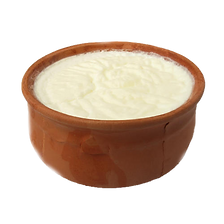
Thairu is a traditional Indian curd that has a history as rich as its flavour. For millennia, thairu (also known as dahi, doi or perugu in other languages) has been produced and enjoyed in many meals, whether as an ingredient, a component of dishes, or even by itself. In Singapore's local history, thairu was produced alongside dairy trades, when women selling their curds were a common sight during the height of cattle industries.
Today, thairu still remains a staple in many Indian households. To find out more about curd, we met Aunty Susila, a local homemaker, who hosted us in her home and shared her process in making her homemade curd.

Aunty Susila shares that making her curd at home has been a bi-weekly affair for many decades, not because it is made in small quantities, but because her family of five loves it. She said that she has been eating it ever since she was little and attributes her good health over the years to her diet.
She learned to make her thairu by being in the kitchen with her aunts and mother, and according to Aunty, the process in making your own curd is fairly simple!

Aunty Susila starts out with fresh milk and pours a whole carton into a pot. She places it on a medium fire to reach a boil. She then reduces the flame to let the milk simmer for about 15 minutes and takes it off the flame. She proceeds to froth the milk with a ladel, allowing it to cool to room temperature whilst breaking up the fat in order to get a smooth consistency.
It is then, when she reveals her secret ingredient: A sample from her last tub of thairu! She adds about a tablespoon's worth into the boiled milk, and she explains the residual heat 'awakens' the probiotic culture from the older curd, allowing it to multiply and ferment the milk into a new batch of thairu over just a couple of hours.

After the curd has settled, she scoops another table spoon out into a glass container in preparation for her next batch. She shares that the curd should be refrigerated and consumed within 3-4 days, and would turn sour if kept longer.
While commercial culture starters are also available, she says nothing tastes quite the same as the one that she makes. Perhaps it is her culture she has cultivated over the years.
We would like to thank Aunty Susila opening her doors to us and sharing her practices and stories. Text adapted from roots.gov.sg